
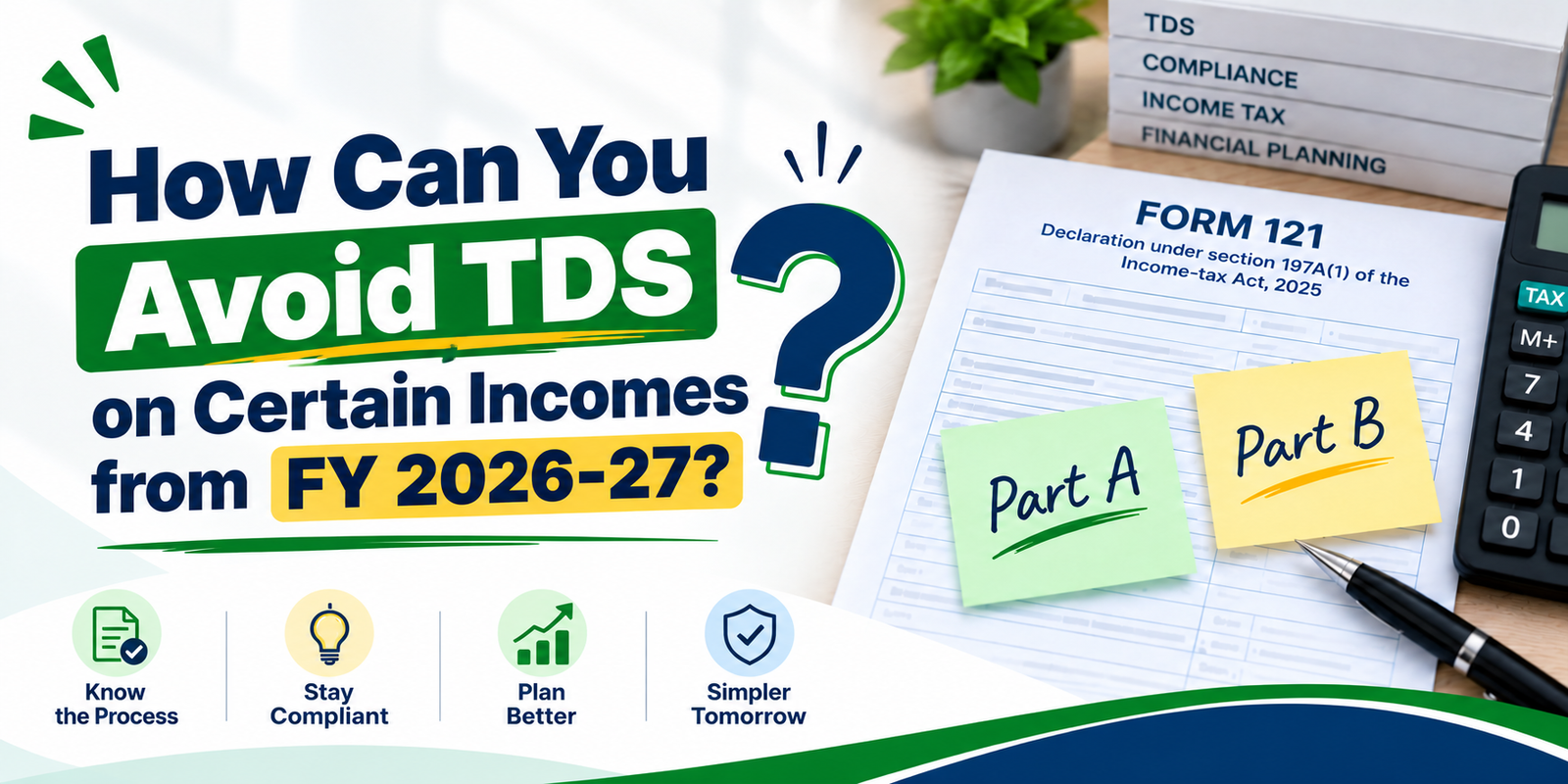
How Can You Avoid TDS on Certain Incomes from FY 2026-27?
And Associates
Form 121 is the new declaration mechanism for eligible taxpayers seeking receipt of specified income without deduction of TDS under the Income Tax Act, 2025. Applicable from Tax Year 2026-27, it replaces the earlier Form 15G and Form 15H framework. Form 121 has two components — Part A, furnished by the payee, and Part B, furnished by the payer.
What is Part A of Form 121?
Part A is furnished by the payee to the payer for non-deduction of TDS on specified income. The declarant provides the prescribed information, including PAN and estimated income, and declares that the tax liability on the estimated total income for the relevant tax year is nil. The declaration should ideally be submitted before the relevant income is credited or paid so that TDS is not deducted.
What is Part B of Form 121?
On receiving a valid Part A, the payer is required to allot a 26-character Unique Identification Number (UIN) to the declaration and electronically furnish Part B containing details of declarations received during the quarter.
Part B is required to be furnished by the 7th day of the month immediately following the relevant quarter — generally 7 July, 7 October, 7 January and 7 April.
How Does It Matter to Businesses?
Banks, companies and other deductors that earlier collected Forms 15G and 15H should update their TDS processes for Tax Year 2026-27. Businesses should ensure that declarations are properly maintained, UINs are generated and Part B is filed within the prescribed timeline to ensure proper TDS compliance.
Mardia Global | Tax & Accounting Insights for Businesses in India