
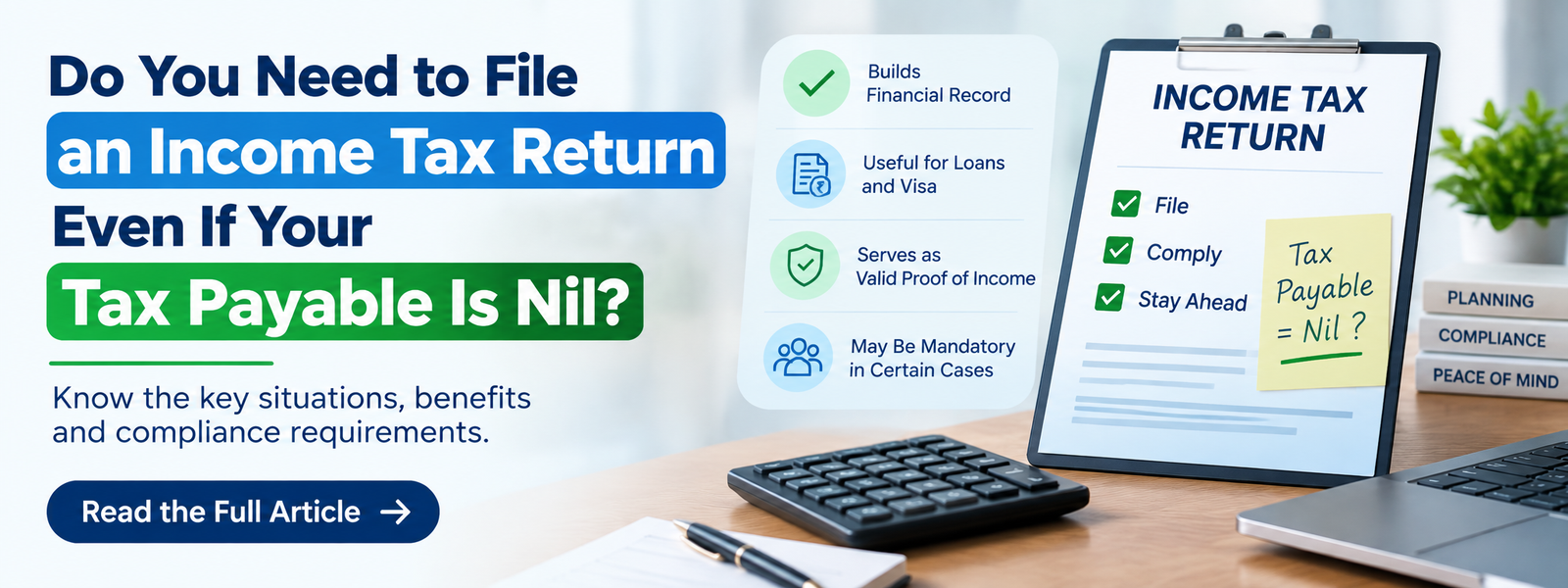
Do You Need to File an Income Tax Return Even If Your Tax Payable Is Nil?
And Associates
Having zero income-tax payable does not necessarily mean that you are exempt from filing an Income Tax Return (ITR). Where income exceeds the applicable basic exemption limit, an ITR may still be required even if the final tax liability becomes nil due to rebate, deductions, tax credits or other applicable provisions. Return-filing requirements may also arise in certain prescribed circumstances irrespective of the final tax payable.
Why File a Nil Return?
Even where no tax is payable, filing an ITR can be useful for maintaining a continuous tax-compliance record. It may also be important for claiming an income-tax refund, carrying forward eligible losses, supporting loan or visa applications, and providing documented proof of income where required.
How Does It Matter to Taxpayers?
Taxpayers should not decide whether to file an ITR merely by looking at the final tax payable. Income level, applicable filing provisions and other prescribed conditions should first be examined. Income should also be reconciled with Form 26AS, AIS and other tax records before determining the filing obligation.
Mardia Global | Tax & Accounting Insights for Businesses in India