
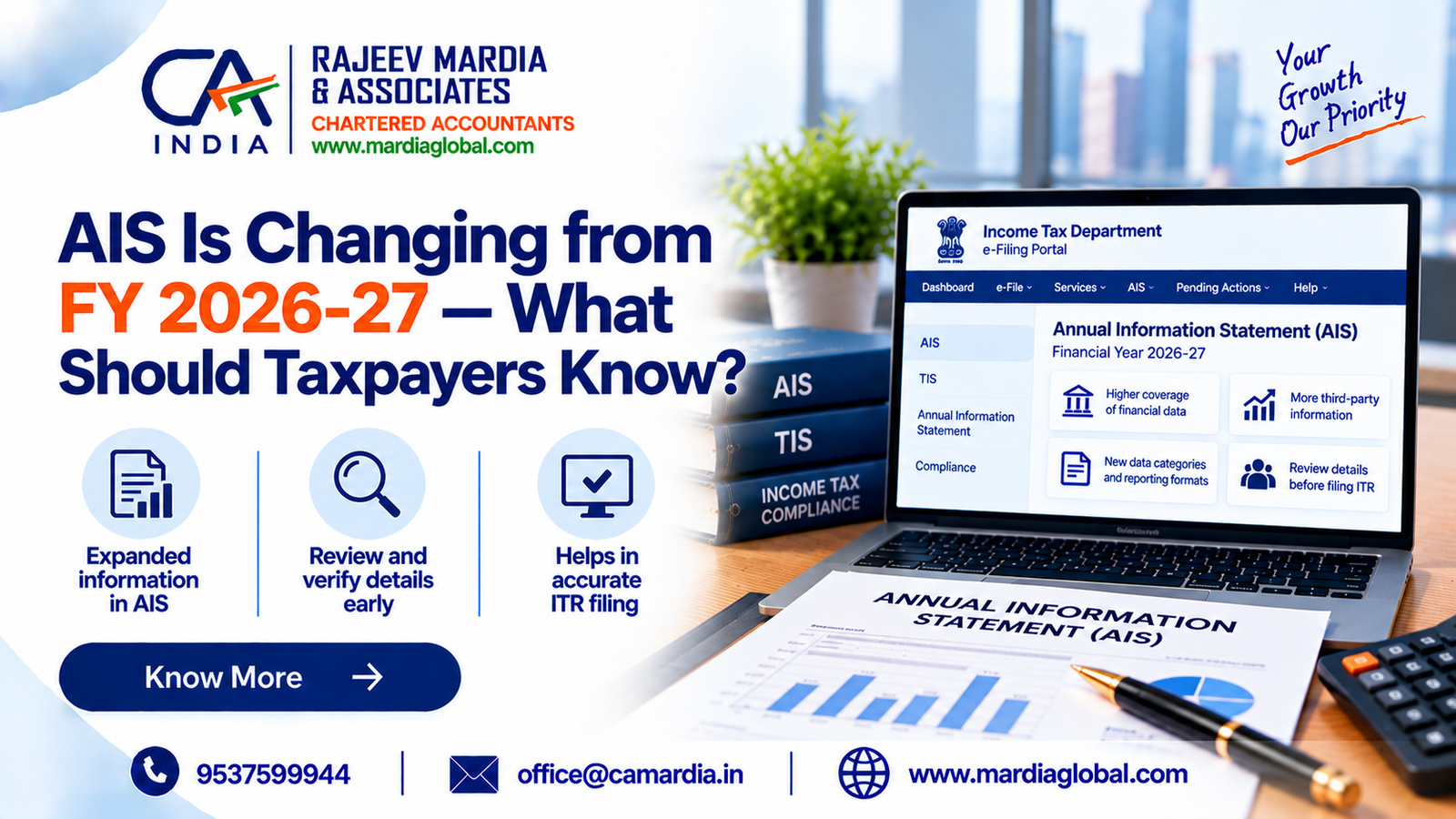
AIS Is Changing from FY 2026-27 — What Should Taxpayers Know?
And Associates
With the Income Tax Act, 2025 applying from 1 April 2026, the Annual Information Statement (AIS) framework has also transitioned to the new law. For Tax Year 2026-27, the Annual Information Statement will be available as Form No. 168. Meanwhile, information relating to FY 2025-26 will continue to appear in the AIS under the earlier Income Tax Act framework.
What Will Form 168 Contain?
Form 168 is designed to provide taxpayers with a consolidated view of important information available with the Income Tax Department. It can include TDS/TCS information, specified financial transactions, tax payments, demands and refunds, pending and completed proceedings, and other information available with the Department.
Importantly, taxpayers do not have to file Form 168 themselves. It is generated by the Income Tax Department and made available through the taxpayer’s registered e-filing account.
How Does It Matter to Businesses and Taxpayers?
During the transition to the new Income Tax Act, taxpayers may see separate statements for different periods. The Department has specifically clarified that AY 2026-27 information relating to FY 2025-26 will continue under the existing AIS, whereas information for Tax Year 2026-27 will be reflected in Form 168.
Businesses should therefore make AIS/Form 168 reconciliation an important part of their year-end tax review. Differences in TDS/TCS, tax payments, reported financial transactions or other information should be identified and reconciled with the books and supporting records before the Income Tax Return is finalised.
The Income Tax Department has also cautioned that transition-period TDS mismatches can arise where an incorrect old/new Act section or incorrect assessment/tax year is selected, making early reconciliation particularly important for FY 2026-27.
Mardia Global | Tax & Accounting Insights for Businesses in India