
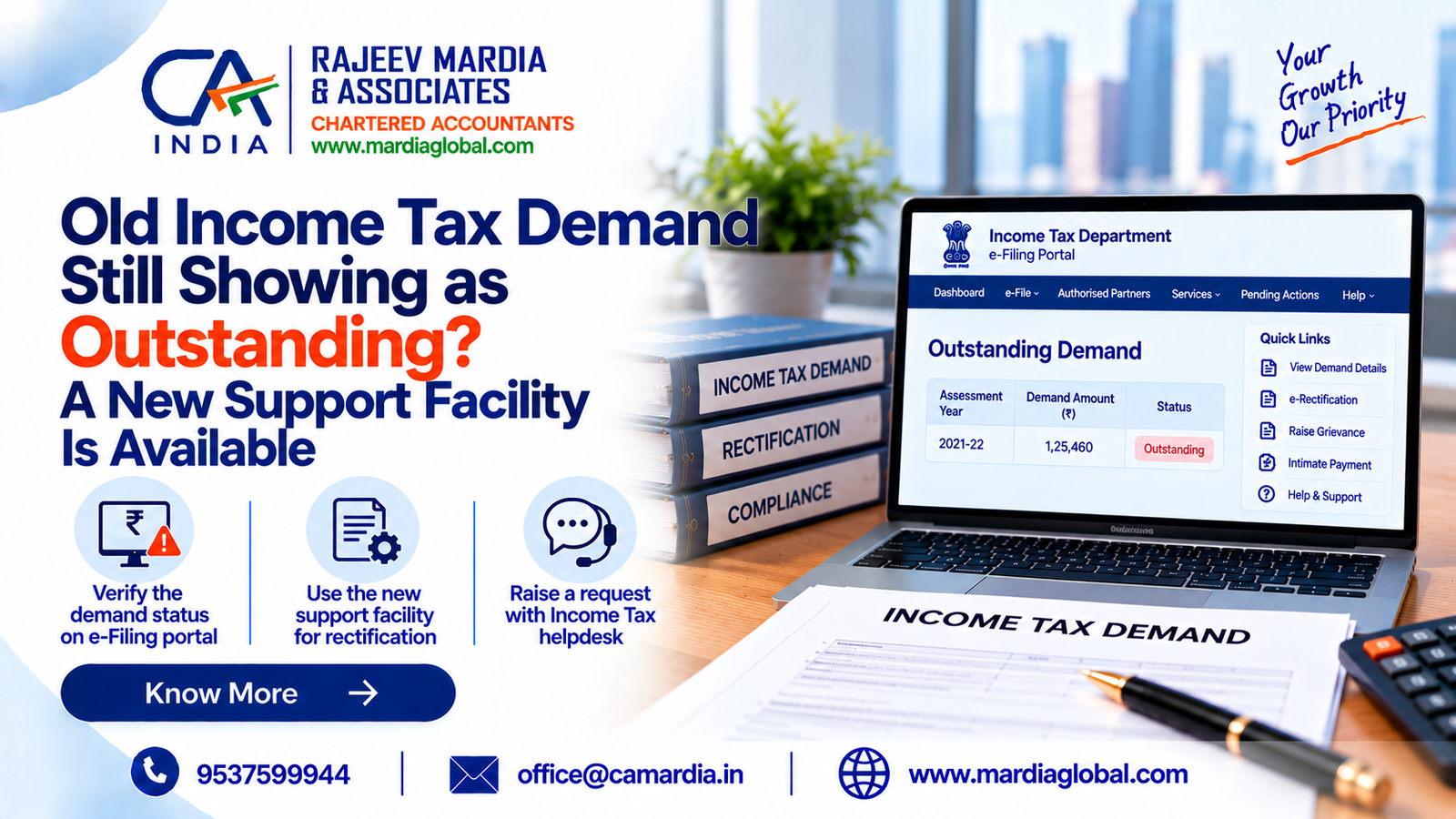
Old Income Tax Demand Still Showing as Outstanding? A New Support Facility Is Available
And Associates
An old Income Tax demand appearing on the e-Filing portal can create problems even where the taxpayer believes that the demand has already been paid, adjusted or is otherwise incorrect. The Income Tax Department has now set up a Demand Management Facilitation Centre (DFC) to guide taxpayers on issues and grievances relating to outstanding tax demands.
Why Should Taxpayers Review Outstanding Demands?
An outstanding demand should not simply be ignored because it relates to an earlier year. Differences can arise because of tax-credit mismatches, challan-related issues, processing adjustments, earlier assessment orders or payments that have not been correctly reflected.
Taxpayers should periodically review the outstanding-demand section of their e-Filing account and reconcile each demand with the relevant Income Tax Return, Form 26AS/AIS, tax challans, intimations and assessment or rectification orders.
Where a demand is incorrect, the appropriate response or rectification mechanism should be considered based on the facts rather than making a payment merely because the amount appears on the portal.
What Is the New Demand Management Facilitation Centre?
The Income Tax Department has established the DFC specifically to guide taxpayers on issues and grievances concerning outstanding demands. The Department currently lists a dedicated email address and telephone support numbers for this facility on its official e-Filing portal.
The facility should be viewed as an additional support mechanism. It does not replace the need to respond to a demand, file a rectification request, pursue an appeal or take any other statutory action where such action is required.
What Should Businesses Do?
Businesses should consider making outstanding-demand reconciliation a regular part of their income-tax review. Old demands should be classified into amounts that are accepted, already paid, disputed, pending rectification or requiring further action.
Resolving discrepancies early can help avoid complications when refunds are processed, assessments are completed or older tax matters are reviewed.
Mardia Global | Tax & Accounting Insights for Businesses in India