
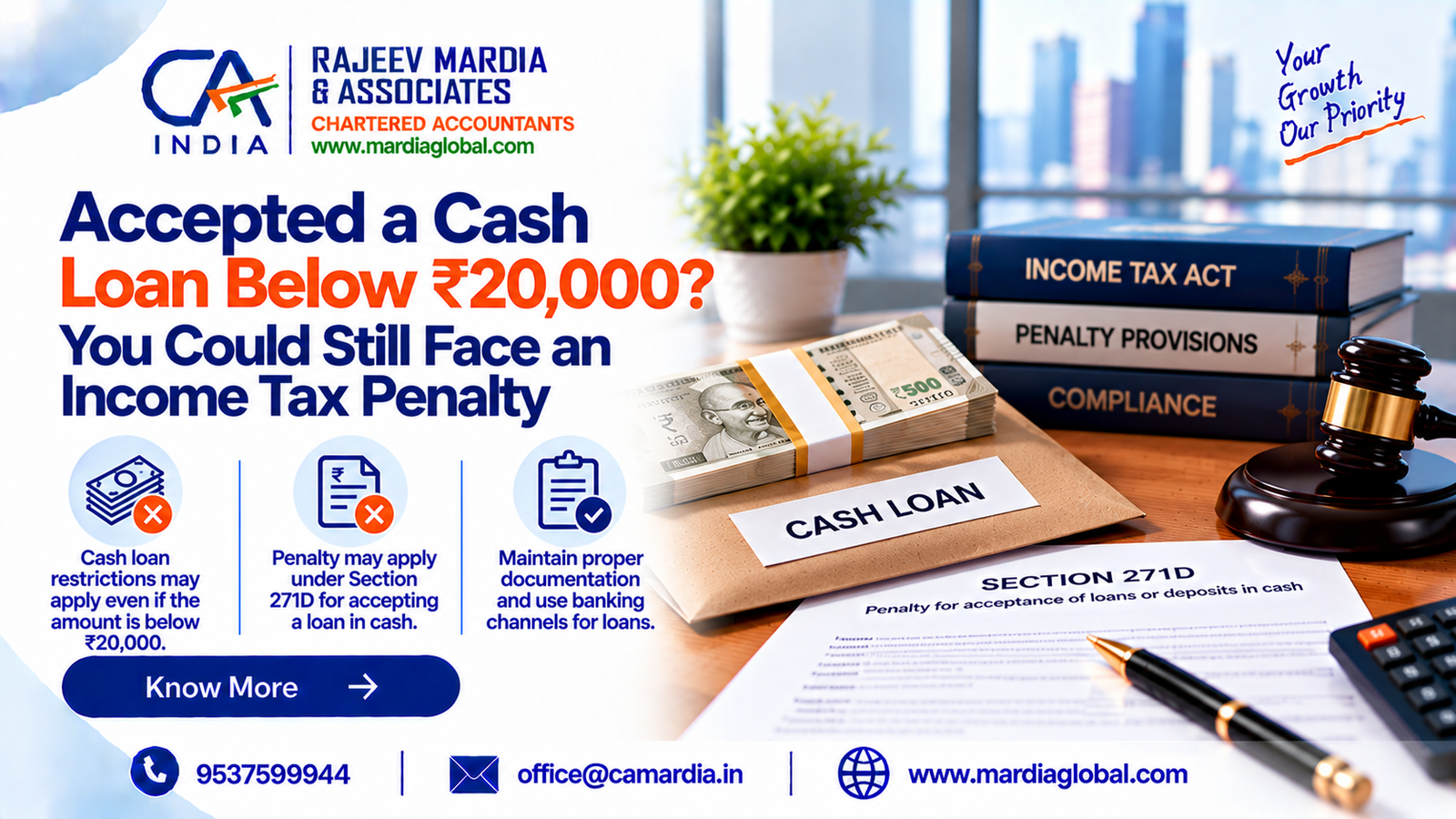
Accepted a Cash Loan Below ₹20,000? You Could Still Face an Income Tax Penalty
And Associates
How Can a Cash Loan Below ₹20,000 Become a Violation?
Suppose a business has already accepted a loan of ₹15,000 from a person, which remains unpaid. If it subsequently accepts another ₹8,000 in cash from the same person, the aggregate outstanding loan becomes ₹23,000.
Although the second transaction is individually below ₹20,000, it may violate the prescribed cash-loan restrictions because the combined amount crosses the statutory threshold.
What Is the Penalty?
Under the Income Tax Act, 1961, a violation of Section 269SS can attract a penalty under Section 271D equal to the amount of the loan, deposit or specified sum accepted in contravention of the provision.
However, penalty relief may be available where the taxpayer establishes reasonable cause, subject to the applicable legal provisions.
Why Does This Matter to Businesses?
Businesses should not evaluate cash loans merely by checking whether each individual transaction is below ₹20,000.
Before accepting any loan or deposit, the accounts team should verify existing outstanding balances from the same person and ensure that the transaction is received through a permitted banking or electronic mode wherever required.
A proper lender-wise loan register and periodic review of cash transactions can help businesses avoid inadvertent violations and substantial income-tax penalties.
Mardia Global | Tax & Accounting Insights for Businesses in India