
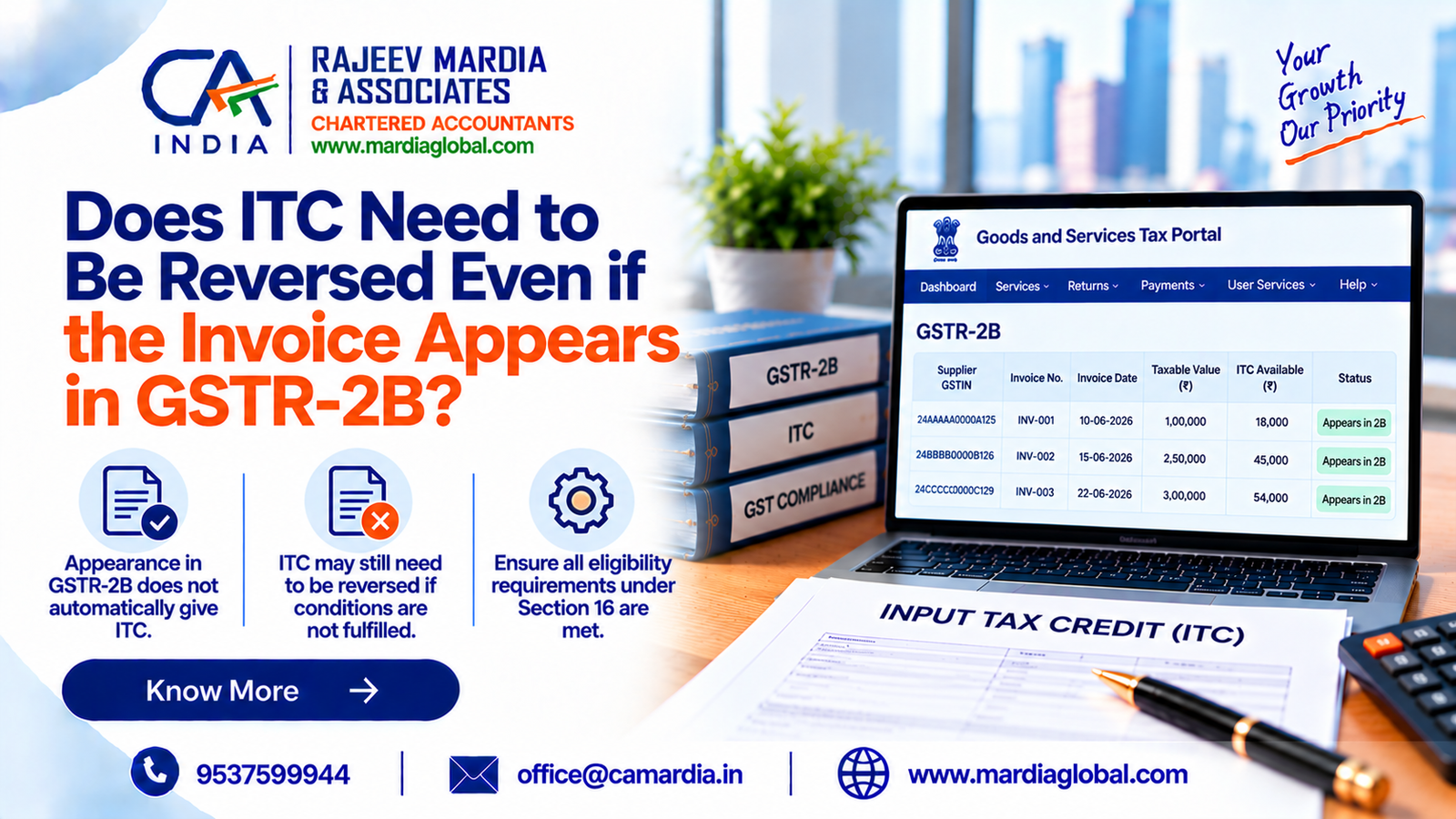
Does ITC Need to Be Reversed Even if the Invoice Appears in GSTR-2B?
And Associates
Yes. Input Tax Credit (ITC) may still need to be reversed even when the purchase invoice appears in GSTR-2B. GSTR-2B helps taxpayers verify supplier-reported invoices, but the appearance of an invoice does not automatically establish eligibility for ITC under the GST law.
This is an important distinction for businesses because claiming ITC without satisfying the prescribed conditions can result in reversal, interest and other compliance consequences.
When Is ITC Reversal Required?
Under Sections 16 and 17 of the CGST Act, 2017, ITC eligibility depends on several conditions beyond the availability of an invoice in GSTR-2B.
For example, ITC may require reversal or may be ineligible where:
- Payment to the supplier is delayed beyond 180 days, subject to the applicable exceptions.
- Goods or services are used for exempt supplies or non-business purposes, requiring proportionate reversal.
- Expenses fall under blocked credits under Section 17(5), such as specified motor vehicles, personal expenses and certain construction-related expenditure.
- Other statutory eligibility conditions are not satisfied, including applicable requirements relating to receipt of goods or services and payment of tax to the Government.
Why Does This Matter to Businesses?
Businesses should not rely entirely on GSTR-2B while claiming ITC in GSTR-3B. An invoice appearing as available in GSTR-2B may still require further examination before the credit is claimed or retained.
Finance teams should periodically reconcile their purchase register, supplier payments, GSTR-2B and ITC ledger. Particular attention should be given to outstanding supplier balances, exempt turnover, blocked credits and temporary reversals eligible for subsequent reclaim.
A regular ITC eligibility review can help businesses identify reversals on time, avoid incorrect credit claims and reduce the risk of interest and disputes during GST assessments.
Mardia Global | GST & Accounting Insights for Businesses in India